 Wordopedia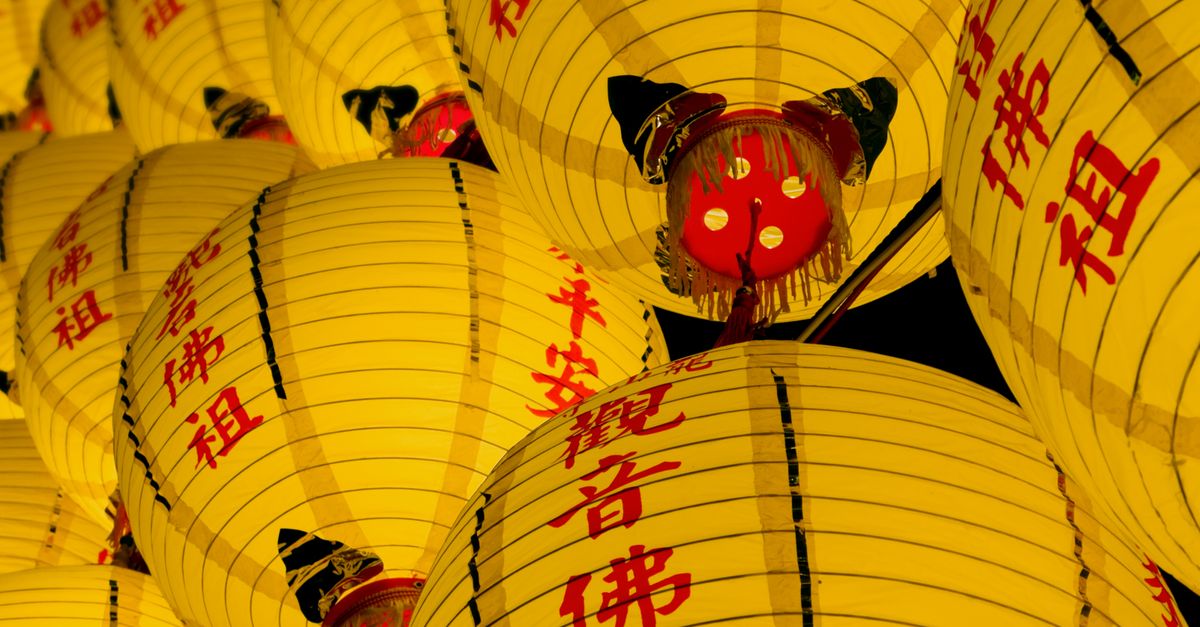
Chinese characters—known as hànzì (汉字) in Mandarin—are the world's oldest continuously used writing system, with an unbroken tradition spanning over 3,000 years. Used by more than 1.4 billion people, Chinese characters are not merely a script but a cultural treasure—an art form, a system of knowledge, and a bridge connecting modern Chinese speakers to the earliest recorded expressions of Chinese civilization.
Origins: Oracle Bones and Bronze
The earliest known Chinese writing appears on oracle bones—tortoise shells and cattle scapulae used for divination during the Shang dynasty (c. 1200 BCE). Shang priests inscribed questions to ancestors and deities on these bones, heated them until they cracked, and interpreted the crack patterns as answers. The inscriptions recorded the questions and, sometimes, the outcomes.
Oracle bone script already contained several hundred distinct characters, many recognizable as ancestors of modern characters. The sophistication of this early writing strongly suggests a prior period of development, though evidence for earlier stages remains fragmentary.
During the Zhou dynasty (1046–256 BCE), characters were increasingly cast on bronze vessels as inscriptions commemorating royal grants, military victories, and ritual events. Bronze script (jīnwén) shows more rounded, elaborate forms compared to the angular oracle bone script.
The first emperor of unified China, Qin Shi Huang (221 BCE), mandated a standardized script—Small Seal Script (xiǎozhuàn)—replacing the varied regional scripts with a unified system. This standardization was a pivotal moment: it ensured that Chinese characters could serve as a shared writing system across a vast and linguistically diverse empire.
How Chinese Characters Work
Chinese characters are fundamentally logographic—each character represents a morpheme (a meaningful unit of language) rather than a sound. The character 木 represents "tree/wood," 水 represents "water," and 人 represents "person," regardless of how these words are pronounced in different Chinese dialects or even in different languages (Japanese, Korean, Vietnamese).
However, the system is not purely logographic. Most characters—approximately 80-90%—are phono-semantic compounds, combining a semantic component (indicating meaning category) with a phonetic component (suggesting pronunciation). This makes the system more complex than simple picture-writing but also more systematic and learnable than it first appears.
A literate Chinese adult typically knows 6,000–8,000 characters. Approximately 3,000 characters are needed for basic newspaper literacy. The total number of characters that have ever existed exceeds 80,000, though most are obscure variants, historical forms, or highly specialized technical terms recorded in comprehensive dictionaries.
The Six Categories of Characters
The ancient Chinese dictionary Shuōwén Jiězì (100 CE), compiled by Xu Shen, classified characters into six categories—the liùshū (六书)—that remain useful for understanding how characters work:
Pictographs (象形 xiàngxíng)
The simplest characters are stylized pictures of the things they represent. 日 (sun) derives from a circle with a dot; 月 (moon) from a crescent; 山 (mountain) from three peaks; 水 (water) from flowing lines. While these constitute only a small fraction of total characters, they include many of the most common and oldest characters.
Simple Ideographs (指事 zhǐshì)
These represent abstract concepts through symbolic conventions. 上 (above) and 下 (below) use a horizontal line with a mark above or below. 一, 二, 三 represent one, two, three through corresponding numbers of horizontal strokes.
Compound Ideographs (会意 huìyì)
These combine two or more elements whose meanings together suggest the character's meaning. 休 (rest) combines 人 (person) and 木 (tree)—a person leaning against a tree. 明 (bright) combines 日 (sun) and 月 (moon). 林 (grove) doubles 木 (tree); 森 (forest) triples it.
Phono-Semantic Compounds (形声 xíngshēng)
The largest category by far. These characters combine a semantic radical (indicating meaning category) with a phonetic component (suggesting pronunciation). 妈 (mother, mā) combines the woman radical 女 with the phonetic component 马 (mǎ, horse). 清 (clear, qīng) combines the water radical 氵 with the phonetic component 青 (qīng, blue/green).
Transfer Characters and Loan Characters
These categories describe how existing characters are borrowed for new uses—either extending a character's meaning to related concepts or borrowing a character for a homophonous word.
Radicals: The Building Blocks
Chinese characters are organized in dictionaries by radicals (bùshǒu, 部首)—recurring components that typically indicate the semantic category of a character. The standard radical system, established by the Kāngxī Zìdiǎn (1716), identifies 214 radicals.
Common radicals include: 氵(water) in 河 (river), 海 (sea), 洗 (wash); 木 (wood/tree) in 林 (grove), 桌 (table), 椅 (chair); 言/讠(speech) in 说 (speak), 话 (word), 语 (language); 心/忄(heart/mind) in 想 (think), 情 (emotion), 忙 (busy).
Learning radicals is one of the most effective strategies for learning Chinese characters. They provide systematic clues to both meaning and dictionary organization, transforming what might seem like thousands of arbitrary symbols into a structured system of combinable parts.
Stroke Order and Calligraphy
Every character is written following a specific stroke order—the sequence and direction in which strokes are drawn. General rules include: top to bottom, left to right, horizontal before vertical, outside before inside. Correct stroke order ensures legibility, efficient writing, and aesthetic balance.
Chinese calligraphy (shūfǎ, 书法) elevates writing to a high art form, practiced for over two millennia. The five major calligraphic styles—seal script, clerical script, regular script, running script, and grass script—range from formal and precise to fluid and abstract. Calligraphy is considered one of the supreme arts of Chinese civilization, alongside painting, poetry, and music.
Simplified vs. Traditional Characters
In the 1950s and 1960s, the People's Republic of China implemented a program of character simplification, reducing the stroke count of approximately 2,200 common characters to improve literacy. For example, 學 (learn) became 学; 國 (country) became 国; 書 (book) became 书.
Simplified characters are used in mainland China, Singapore, and Malaysia. Traditional characters remain standard in Taiwan, Hong Kong, and Macau. Both systems are mutually learnable, and educated Chinese readers can typically navigate both, though proficiency in one does not guarantee fluency in the other.
Chinese Characters Beyond China
Chinese characters have been adopted and adapted by other East Asian cultures. Japanese uses Chinese characters (kanji) alongside two syllabaries (hiragana and katakana). Korean historically used Chinese characters (hanja) alongside Hangul; today, Hanja is used sparingly. Vietnamese used Chinese characters (chữ Hán) and a derivative system (chữ Nôm) until the Latin-based chữ Quốc ngữ replaced them in the 20th century.
This shared heritage of Chinese characters created a Sinosphere—a cultural zone where written communication could transcend spoken language boundaries. A Chinese, Japanese, and Korean reader might not understand each other's speech but could communicate through shared characters, each reading them in their own language's pronunciation.
Learning Chinese Characters
Learning Chinese characters is often perceived as one of the great challenges of second language learning. However, the system is far more regular than it first appears. Understanding radicals, phonetic components, and character formation principles transforms the task from rote memorization into systematic pattern recognition.
Effective learning strategies include: studying radicals early, learning characters in semantic groups, using spaced repetition systems, practicing writing by hand (which reinforces structural memory), and reading extensively at appropriate levels. Knowledge of etymology—understanding how and why a character evolved—deepens comprehension and aids retention.
Chinese Characters in the Digital Age
The digital era posed a unique challenge for Chinese characters. Unlike alphabetic scripts, Chinese cannot be typed with a simple keyboard mapping. Input methods—systems for converting keystrokes into characters—were essential for bringing Chinese into the computer age.
The most common input method today is Pinyin input: users type the romanized pronunciation, and the software presents a list of matching characters for selection. Other methods include stroke-based input, handwriting recognition, and voice input. These technologies have not only preserved Chinese characters in the digital world but have made them more accessible than ever.
Unicode encodes over 90,000 Chinese characters (across several CJK Unified Ideograph blocks), ensuring comprehensive digital representation of both modern and historical text.
Cultural Significance
Chinese characters are far more than a writing system—they are central to Chinese cultural identity. Each character carries layers of historical and cultural meaning. Characters appear in art, architecture, religion, philosophy, and everyday life. Spring Festival couplets, name seals, calligraphic scrolls, and tattoos all draw on the aesthetic and symbolic power of characters.
The continuity of Chinese characters—connecting modern readers directly to texts written thousands of years ago—is unique among the world's major writing systems. A Chinese student today can learn to read oracle bone inscriptions from the Shang dynasty, experiencing a direct connection to the very beginnings of Chinese civilization. This continuity is both the system's greatest achievement and its most profound cultural gift.
Look Up Any Word Instantly on Wordopedia
Get definitions, pronunciation, etymology, synonyms & examples for 1,000,000+ words.
Search the Dictionary